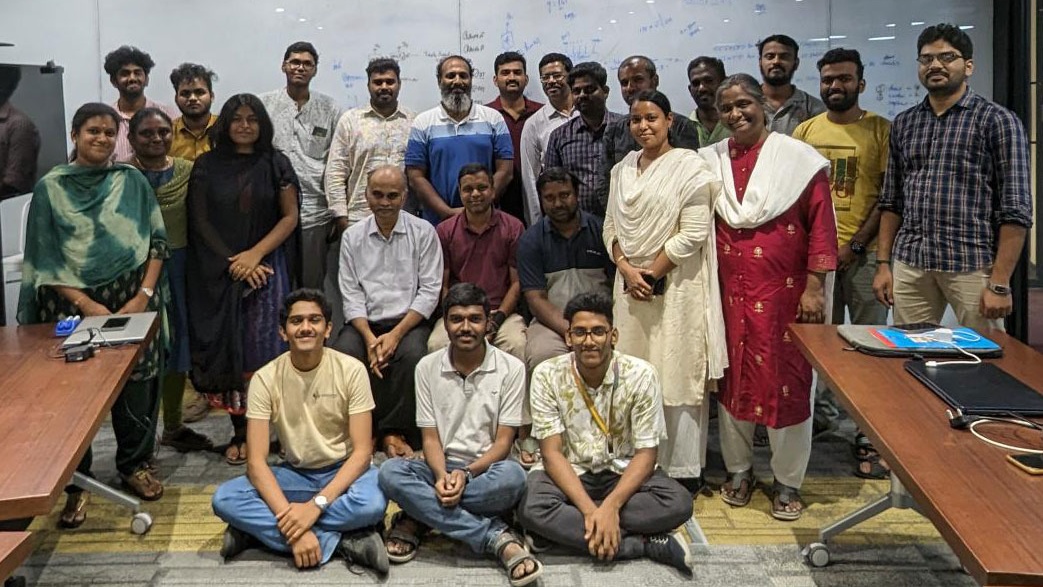
One of my favorite quotes about education is, "When the student is ready, the teacher appears." For a long time, I struggled to delve deeply into the mathematics of generative AI and machine learning through self-study. Just when I needed a mentor the most, Mr.Sudarsun Santhiappan appeared in my life.
it’s May 3rd 2024 morning 6am I was in a dialama to wether should I go and attend a Meetup happening in Chennai or not. I know the speaker is a famous person I was following him on social media quite a longe time. I saw his post in social media about the class he is going to take about Generative AI and Fundamental of Machine learning. I sent a mail regarding my interest to attend the session. He welcomed me but the important part is I have not received the exact location till that morning 6am.
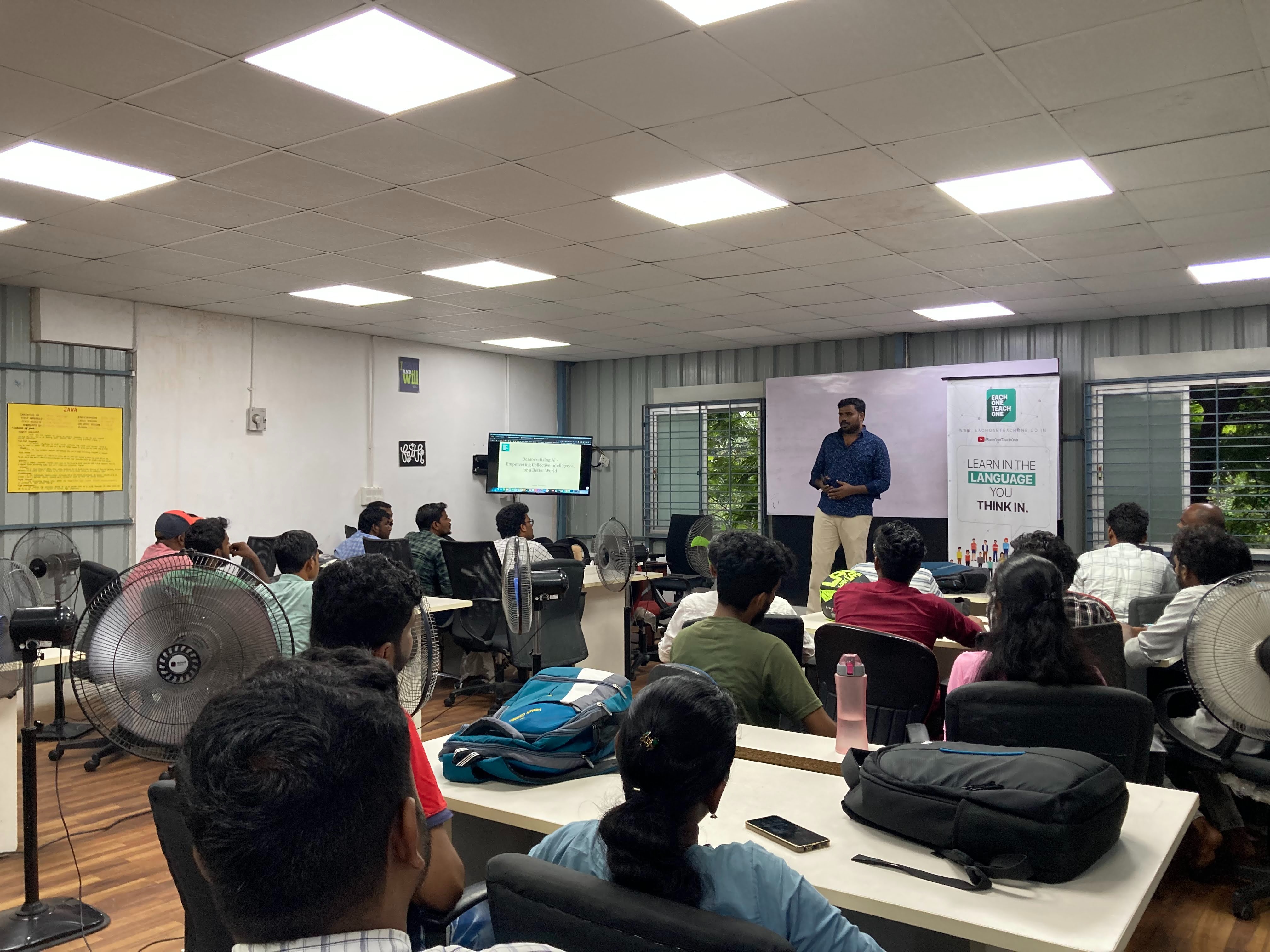
But my intuition says that I should not miss this Meetup. So I searched for the address in company were the session going to happen. No luck I don’t get the address and lost hope that I can’t make this session. Around 9pm I saw my WhatsApp and noticed a Google map link. Yes the message is from Mr.Sudarsun Santhiappan who is mentor of that session. When I opened the link I was shocked to see that the location for the venue is around 1 hour travel from my location and the session will start at 10am. So I rushed to venue when I reached there the sesion was about to start. From that particular moment the next one month was filled with knowledge fun and debets.
On the first day of class, he provided a brief introduction to Data Science, Machine Learning, and Generative AI. My main takeaway from Day One is that the ultimate goal is AI. The path to achieving AI is through Data Science, and the toolkit at our disposal is Machine Learning.
When there is a discussion about SPACE in machine learning we had some interesting debate about what is space. Our conversation went to outer space and finally diverted into religious discussion about Chidambaram Natarajar Temple it was a interesting fact.
1st Week - Basics of Machine Learning
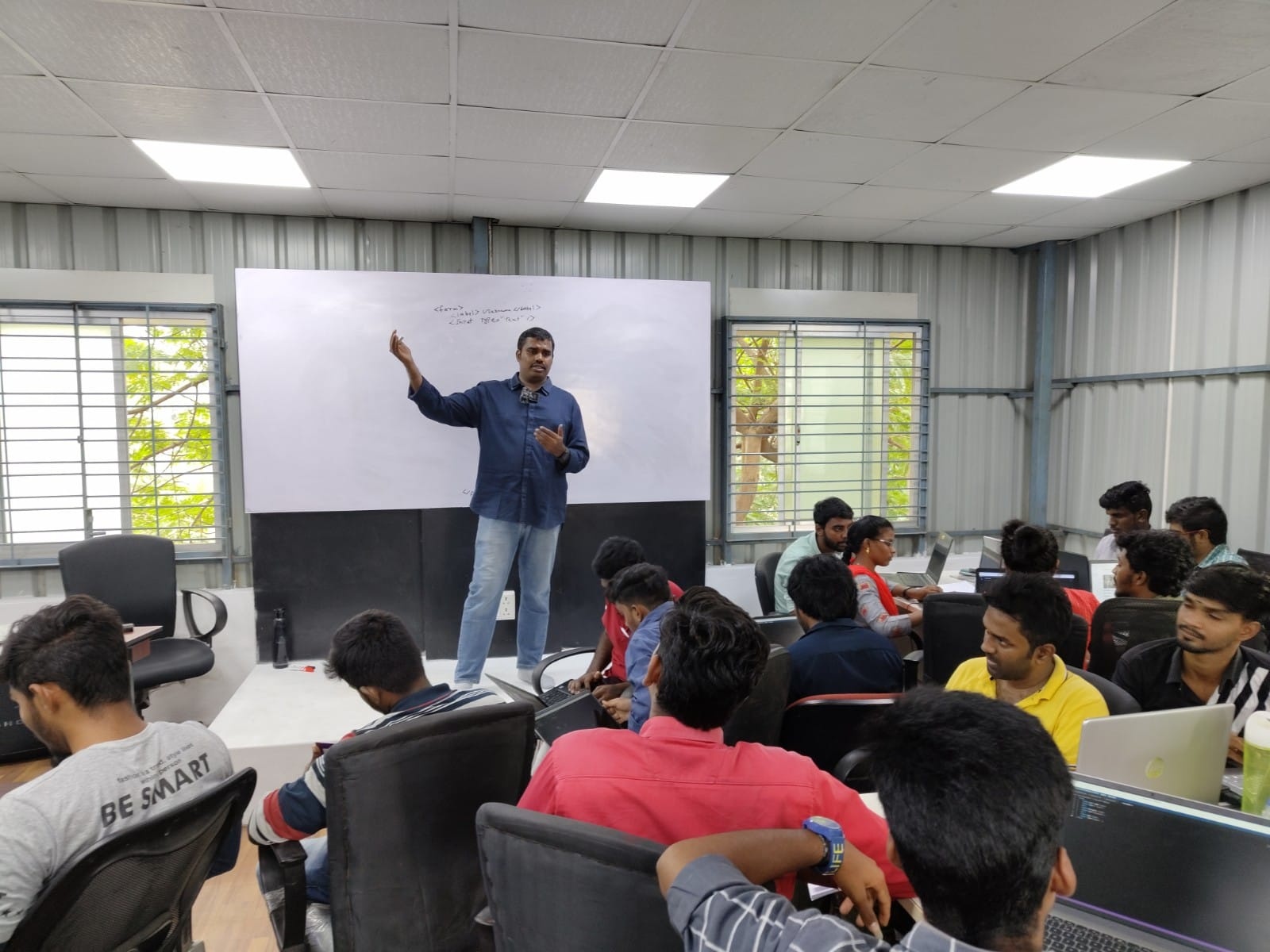
The first week of the class is dedicated for basics and fundamentals. We began by exploring the fundamentals of Machine Learning and the basics of statistics, including the differences between a population and a sample. We delved into probability mass functions and cumulative mass functions, as well as generating random samples. The concept of reducing error in models was discussed, along with a clear definition of what a model is. We covered both linear regression and polynomial regression, explaining the degrees in polynomial functions. Continuous data and continuous functions were distinguished from discrete data and discrete functions. The characteristics of finite, infinite, countable, and uncountable sets were clarified. We examined the importance of gradient descent and why it is needed, along with an introduction to vector spaces and the utility of matrices. The concepts of local minima and global minima were discussed, as well as the Lagrange multiplier method. The bias-variance tradeoff was explained, and the differences between gradient descent, mini-batch gradient descent, and stochastic gradient descent were explored. Finally, we defined epochs and steps in the context of training machine learning models.
2nd Week - Classification
2nd week is for classification, it started with discriminative classifiers, which are models used to classify data points by estimating decision boundaries. We explored the handling of category data and label data, essential for training and evaluating classifiers. The concept of HULL was examined, though it often pertains to computational geometry or algorithms related to data structures. We discussed evaluation metrics like precision and recall, crucial for assessing the performance of classification models. Additionally, we covered clustering techniques, such as single linkage, and the notion of centroids, which represent the center of a cluster. We looked at methods to measure distances between data points, including the far distance approach. An interesting topic was converting classification problems to regression problems, a technique useful for certain types of predictive modeling. Lastly, we reviewed the sigmoid function, an activation function commonly used in neural networks for binary classification tasks.
3rd Week - Neural Network
I thought 3rd week will more difficult to understand but Mr.Sudarsun Santhiappan made it easy. We explored the foundational concepts of Neural Networks, starting with the essential components such as the Input Layer and the Hidden Layer. We delved into various Activation Functions, including Linear, Sigmoid, and Softmax, to understand their roles in transforming inputs into outputs within the network. Following this, we moved on to Convolutional Neural Networks (CNNs), which are pivotal for feature extraction in image data. We examined the process of applying Kernels or Filters, discussed the significance of Padding and Stride in managing spatial dimensions, and highlighted the addition of Nonlinearity to introduce complexity into the model. Furthermore, we covered Pooling techniques to reduce dimensionality and computational load, culminating with the application of the reLu Activation Function to enhance the network's ability to learn and perform complex tasks.
4th Week - GAN,RNN,LSTM
We discussed about fundamentals of Generative Adversarial Networks (GANs), exploring the roles of the Discriminator Neural Network and the Generator Neural Network. We examined how fake data (noise) and real data are passed to the networks to calculate probabilities. Our study then transitioned to Recurrent Neural Networks (RNNs), focusing on the activation function TanH and the challenges posed by vanishing and exploding gradients. Further, we investigated Long Short Term Memory (LSTM) networks, breaking down their critical components such as the forget gate, memory gate, output gate, and input gate. We also explored different sequence processing types: one-to-one, many-to-one, many-to-many with output generated after the input, and many-to-many for continuous data.
The HERO of Generative AI (TRANSFORMERS)
We began by exploring the differences between BERT and GPT, specifically focusing on BERT's Masked Language Model (MLM) and GPT's Causal Language Model (CLM). This led to a discussion on Masked Language Models versus Causal Language Models, highlighting the distinct approaches they take in language processing. We delved into the concepts of Auto Encoders and Autoregressive models, clarifying their respective roles and functionalities. The training techniques used in these models were also covered, including MASK training with BERT's encoder and striding-based training in GPT's decoder. Furthermore, we discussed the process of fine-tuning models by freezing the encoder. Tokenization was another key topic, where we examined its importance in preprocessing text data. Finally, we explored Byte Pair Encoding (BPE), a popular method for tokenizing text in NLP tasks.
Some WOOOW moments.
This four-week session offers a comprehensive coverage of topics equivalent to the IIT syllabus, tailored for knowledgeable individuals. What sets it apart is that it's being generously offered as a free course by Mr.Sudarsun Santhiappan. While there are numerous online free courses available, it's rare to find someone willing to invest their time and expertise in delivering a 50-hour offline course at no cost.
After this session, my perspective on Mathematics has completely changed. During my school and college days, I used to say, "Whoever invented math, if I find him, I will kill him." But after this class, my statement has changed to, "The people who discovered mathematics are such geniuses.” Mr.Sudarsun Santhiappan made me fell in love with maths.
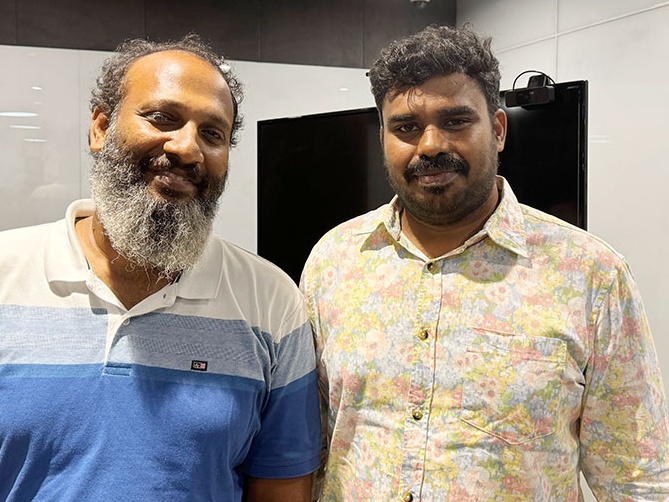
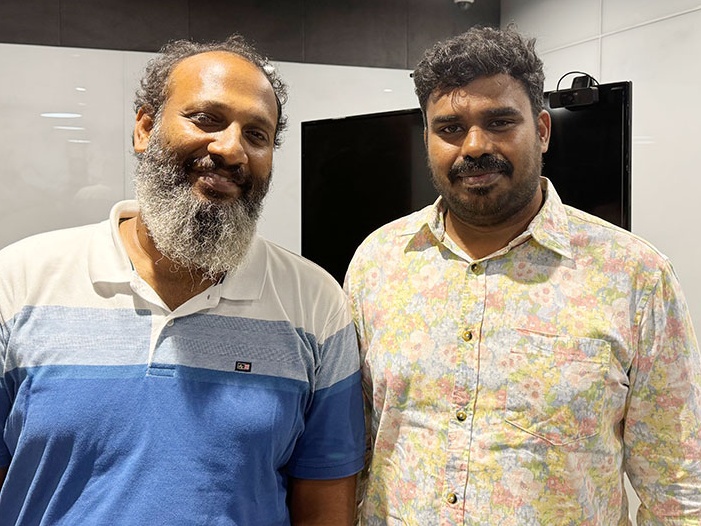
I don’t like to take selfies even with celebrities. But first time I my self went forward and asked Sudarsun can I have a selfi with you? The amount of knowledge and he delivers and the style and way he takes the class is most adorable.
He also discusses the importance of making knowledge accessible to all. Those who follow me on social media are aware of my vision for education, which I initiated through the "Each One Teach One" nonprofit community aimed at sharing knowledge. I often illustrate the concept with a simple analogy: If you and a friend each have one rupee and you exchange them, you still end up with one rupee each. However, if you and your friend each possess one piece of knowledge or idea and you share them, you both end up with two or more ideas. I strongly believe in this notion.
I was delighted to learn that Mr. Sudharshan shares the same belief and envisions a world where knowledge is freely accessible to all. I assured him of my commitment to joining his vision and contributing to its realization.
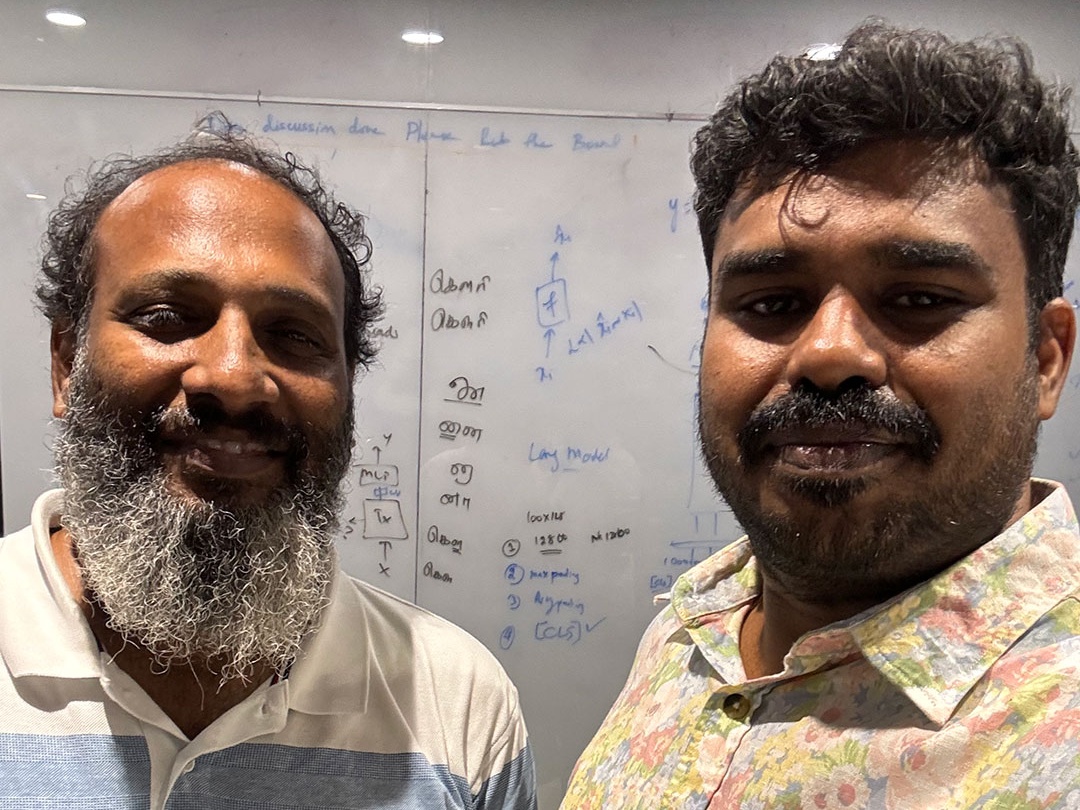
Thanks Sudarsun Sir...
More Articles